
Mental Health Crisis Response: Expand STAR Citywide
Denver's STAR program proves that trained mental health responders outperform armed police for behavioral health crises - at lower cost, with better outcomes, and without violence. Fund it fully. Deploy it everywhere.
- Drafted
- Organizing
- Introduced
- Committee
- Enacted
The Problem
Every day in Denver, people in mental health crisis call 911. They get a police officer.
That officer may be compassionate and well-trained. But they are also carrying a gun, wearing a uniform that triggers fear and mistrust in many people experiencing psychiatric emergencies, and working within an institution whose primary tools - arrest, detention, force - are almost never the right response to a mental health crisis.
The results are predictable: people in crisis end up handcuffed, hospitalized involuntarily, and cycled through emergency rooms and jails rather than receiving treatment. Encounters escalate. People get hurt. People die. Not because officers are bad, but because the wrong responder was sent.
Denver knows this. That is why Denver created STAR.
What STAR Is
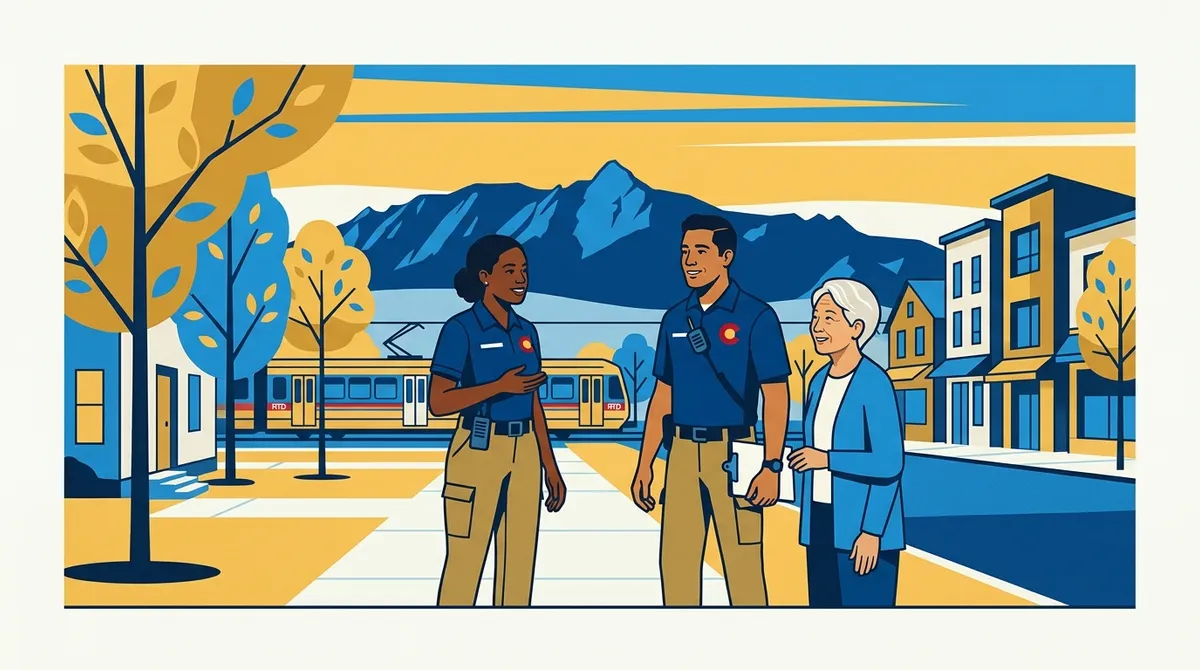
The Support Team Assisted Response (STAR) program, launched in 2020, sends a mental health clinician and a paramedic - without police - to non-violent behavioral health 911 calls. In its first two years of operation, STAR responded to over 2,300 calls. Not a single call resulted in an arrest or use of force. The program was evaluated by researchers at the University of Denver, who found significant reductions in low-level crime in the areas where STAR operated (Dee & Pyne, 2022).
STAR is not an experiment. It is a proven program. Denver has been operating it for five years. The question is no longer whether it works - it does - but why it has not been funded to operate 24/7 citywide.
What STAR Currently Cannot Do
Despite its proven effectiveness, STAR operates with severe limitations:
- Hours: STAR is not available 24 hours a day, 7 days a week. Late-night and weekend mental health crises - when people are most vulnerable - are handled by police.
- Coverage: STAR does not cover all Denver police districts. Large portions of the city have no STAR access.
- Capacity: STAR teams are limited in number. High call volumes result in police being dispatched even during STAR operating hours.
- Call types: Denver 911 dispatch criteria for STAR are narrow. Many calls that STAR clinicians would be better equipped to handle are still automatically routed to police.
The funding gap is the core issue. Denver’s STAR program budget has not kept pace with demonstrated need or with the scale of behavioral health calls the city receives.
The Cost of Under-Funding
Every mental health call dispatched to a police officer instead of a STAR team has downstream costs:
- Emergency room visits for involuntary psychiatric holds that could have been resolved in community.
- Jail bookings for low-level offenses stemming from mental health crises.
- Repeat calls - because jail and ER do not treat the underlying condition.
- Use-of-force incidents - the risk of a mental health encounter escalating to physical force is substantially higher with police than with trained clinicians.
- Officer burnout - police consistently report that mental health calls are among the most stressful and for which they feel least prepared.
The estimated public cost of a single unresolved mental health crisis spiraling into arrest, booking, and repeat ER visits is $40,000-$80,000 (National Alliance on Mental Illness, 2022). STAR costs $500 per response. The math is not complicated.
Our Solution
1. Full 24/7 STAR Coverage in All Denver Police Districts
Expand STAR from its current limited hours and geographic coverage to full 24-hour, 7-day-per-week operation in all six Denver Police Districts.
This requires:
- Tripling the STAR team count from the current ~10 teams to approximately 30 teams to cover all shifts and districts.
- Expanding the STAR call-type criteria in Denver’s 911 dispatch system. Any call involving a mental health crisis, substance use, homelessness, or welfare check with no report of weapons or violence should be eligible for STAR dispatch.
- Co-response protocols for calls that begin as potential STAR calls but where the situation is unclear. A STAR team and a police officer dispatch together; the officer stands by unless needed.
2. Dedicated Mental Health Crisis Line - Separate from 911
Create a dedicated Denver mental health crisis line (separate from 911) that routes directly to STAR clinicians. This provides:
- A lower-barrier path for people in crisis or their families who don’t want to call police.
- A direct connection to community mental health resources, peer support specialists, and mobile crisis teams.
- Integration with Colorado’s 988 Suicide and Crisis Lifeline, which launched federally in 2022.
The line should be staffed by licensed clinicians and peer support specialists (people with lived experience of mental health or substance use crises), available 24/7, and bilingual (English/Spanish at minimum).
3. Crisis Stabilization Centers - Alternatives to the ER
Fund at least three community-based crisis stabilization centers in high-need Denver neighborhoods. These are walk-in or STAR-referral facilities providing:
- Short-term crisis stabilization (up to 23 hours) without involuntary commitment.
- Immediate connection to outpatient mental health treatment, housing support, and peer services.
- Medical evaluation and, where appropriate, medically-supervised withdrawal management.
Crisis stabilization centers reduce ER overcrowding, reduce unnecessary hospitalization, and provide continuity of care. They exist successfully in cities including San Antonio (the “Restoration Center” model) and Tucson.
4. Peer Support Workforce Development
STAR’s model works partly because it includes peer support specialists - people with lived experience of mental health crises who can connect with callers and clients in ways that clinical professionals alone cannot. Expand the peer support workforce by:
- Funding a Denver Peer Support Training Academy in partnership with community mental health centers.
- Creating a career pathway: peer support → certified recovery coach → licensed counselor, with city funding for education and certification.
- Prioritizing hiring from communities most affected by the crisis response system: people of color, people who have been incarcerated, unhoused people.
5. Data, Transparency, and Accountability
Publish quarterly dashboards tracking:
- STAR call volume, response times, and outcomes by district.
- Police responses to behavioral health calls: outcomes, use-of-force incidents, ER referrals, arrests.
- Comparison of per-call costs: STAR vs. police vs. combined ER + jail outcomes.
This data already exists within city systems. Making it public holds the program accountable and makes the case for continued funding.
Evidence
What the Research Shows
The Denver STAR program is one of the most studied civilian crisis response programs in the country:
| Study | Finding |
|---|---|
| Dee & Pyne, NBER Working Paper, 2022 | STAR reduced crime in covered areas by 8-12% relative to uncovered areas |
| University of Denver STAR Evaluation, 2022 | Zero arrests, zero uses of force in 2,300+ responses; high client satisfaction |
| Denver STAR Program Report, 2023 | Cost per response ~$500 vs. $1,000+ for police response |
| CAHOOTS (Eugene, OR), 30-year evaluation | Civilian crisis program handles 24% of all 911 calls without police; model for STAR |
| National Alliance on Mental Illness, 2022 | Unresolved mental health crises cost $40,000-$80,000 per individual cycle |
Denver is not pioneering unproven territory. Eugene, Oregon’s CAHOOTS program has operated for over 30 years. Olympia, Washington; Portland; Denver; and dozens of other cities have confirmed the model. The barriers to scaling STAR are political and budgetary - not evidential.
Denver’s Own Data
Denver Police Department data shows that approximately 24% of all 911 calls involve behavioral health, not crime (Denver Post, 2023). Of roughly 630,000 annual 911 calls, that is approximately 150,000 calls per year - over 400 per day - currently handled primarily by armed officers.
STAR currently handles approximately 6,000-8,000 of those calls per year. The gap between 8,000 and 150,000 is the scale of the opportunity.
Local Context
Denver’s behavioral health crisis is visible daily: in encampments that grow because people have no treatment pathway, in ER waiting rooms overcrowded with psychiatric patients, in jails that have become de facto mental health facilities, and in the repeated deaths of people in psychiatric crisis during police encounters.
The communities most affected are Black and brown Denverites. Research consistently shows that people of color are more likely to be killed or injured during police mental health encounters. They are also less likely to seek help through systems that have historically criminalized rather than treated their distress. A civilian crisis response - approachable, non-coercive, culturally competent - addresses this disparity directly.
STAR is not “defunding the police.” It is right-sizing the response. Police officers should be doing police work. Mental health clinicians should be responding to mental health calls. This is better for everyone - including police, who consistently report that behavioral health calls are among the most stressful and for which they are least trained.
Frequently Asked Questions
“Is it safe to send clinicians without police?” STAR data from Denver and comparable programs across the country confirms it is. In five years of Denver STAR operation, there has not been a serious safety incident involving a STAR clinician on a call. The program has rigorous protocols for identifying calls that require police co-response. The vast majority of mental health crisis calls involve people who are distressed, not dangerous.
“What about calls that turn out to involve weapons?” STAR dispatch criteria exclude calls with reported weapons or violence. For calls where the situation is unclear, co-response protocols deploy both STAR and police. As STAR expands, clinicians and dispatch build institutional knowledge about which calls are appropriate for STAR-only response. This is a dispatch protocol question, not a reason to limit the program.
“Won’t this cost more money?” No. STAR costs approximately $500 per response, versus $1,000+ for police response and $40,000-$80,000 per individual when a mental health crisis cycles through ER and jail. A fully funded 24/7 citywide STAR program would cost approximately $25-30M/year - a fraction of what the current system costs in downstream emergency services, incarceration, and lost productivity.
“What happens to police if STAR handles more calls?” Officers are freed up to focus on actual crime, which is what most officers prefer. Denver Police have generally been supportive of STAR precisely because behavioral health calls are difficult and frustrating for officers who lack mental health training. This is not a competition between police and STAR - it is a division of labor that makes both more effective.
How We Pay For It
Full 24/7 citywide STAR expansion would require approximately $25-30M/year in operating funding.
| Funding Source | Estimated Amount |
|---|---|
| Redirect from police overtime (behavioral health calls) | ~$8-10M |
| Colorado Behavioral Health Administration state grants (SB23-008) | ~$5-7M |
| Federal SAMHSA Community Mental Health Block Grants | ~$3-5M |
| Denver General Fund (new appropriation) | ~$7-10M |
This is a reallocation, not new spending. The city currently spends this money - and more - on the expensive, ineffective back end of mental health crises: ER visits, jail, repeat emergency response. Moving funding upstream to crisis prevention and civilian response saves money over any three-to-five-year horizon.
References
- Dee, T. & Pyne, J. A Community Response Approach to Mental Health and Substance Use Crises Reduced Crime. Science Advances / NBER, 2022.
- Denver Police Department. 911 Call Classification Data. Reported in Denver Post, 2023.
- Denver STAR Program. Annual Report. 2023.
- National Alliance on Mental Illness. The Cost of Mental Health Crises. 2022.
- University of Denver, Sturm College of Law. STAR Program Evaluation. 2022.
- Colorado General Assembly. SB23-008, Behavioral Health Administration.
- Colorado General Assembly. HB24-1309, Mental Health Crisis Response Co-Responder Program.
- White Bird Clinic. CAHOOTS Program. Eugene, Oregon. 30-year evaluation data.